If you have never purchased (or received!) a diamond engagement ring before, then you could be forgiven for being completely baffled by the terminology commonly used by jewellers to describe the range of options you will need to consider: style, size, shape, cut, weight, setting, metal type, etc, etc.
As with any major purchase, it pays to be well prepared in advance. Check out our glossary and you won't go far wrong when it's time to track down that perfect engagement ring.
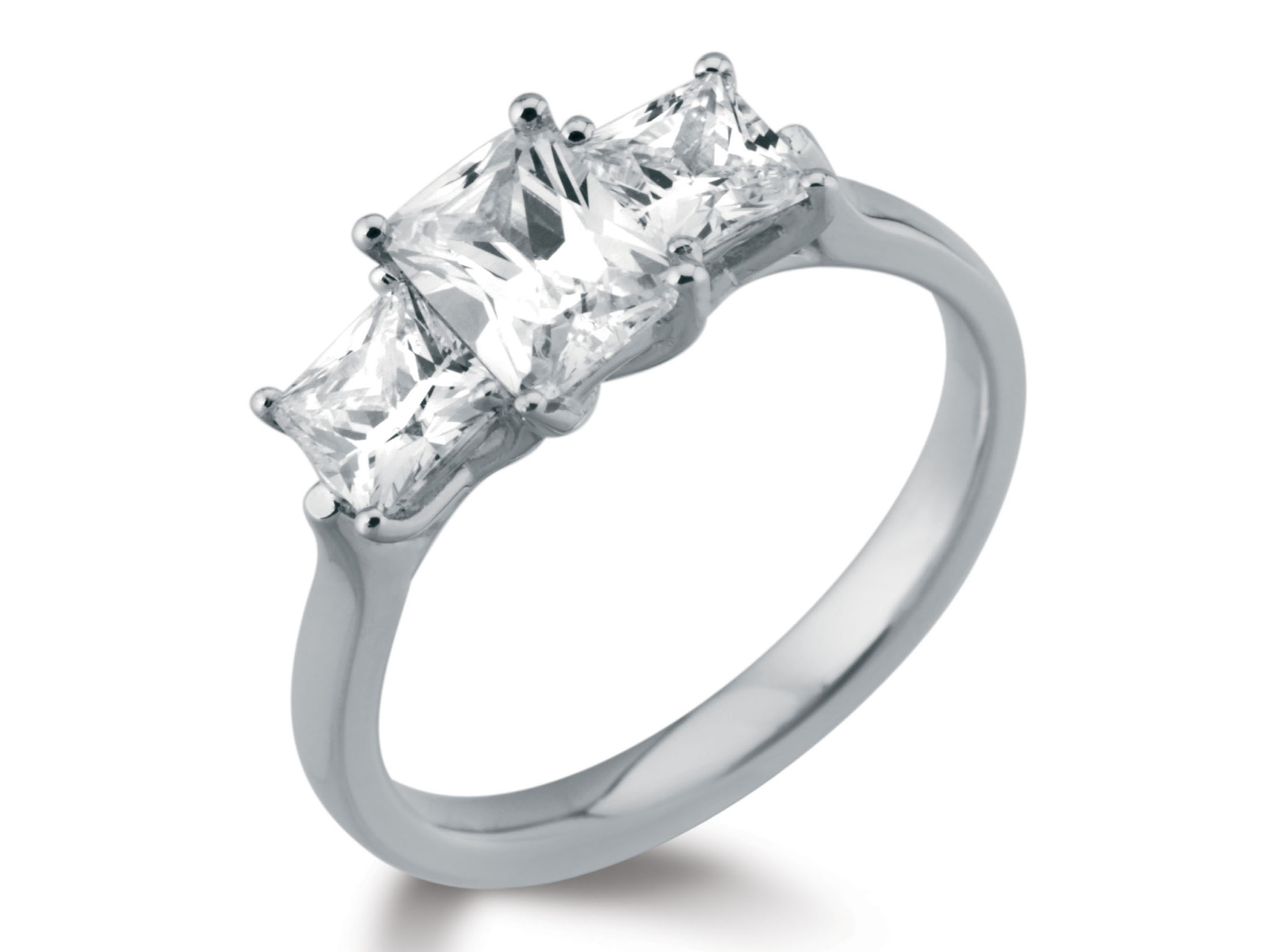
Paisley Amazing Emerald Cut Trilogy Engagement Ring
Accent Diamonds – smaller diamonds that are arranged around the central diamond. Typically used to enhance the main diamond.
Blemish – external flaws which can affect the clarity of a diamond.
Brilliant cut – a gem cutting style designed to maximise brilliance and sparkle. Triangular, kite-shaped, or cone-shaped facets are arranged around the centre of the diamond. This enables light to enter the diamond from several different angles and directions. The standard round brilliant cut diamond has 58 facets.
Brilliance – the level of brightness emitted from the centre of the diamond.
Carat (ct) – a jewellery industry term used to quantify the weight of a diamond.
Clarity – a diamond which minimal inclusions and blemishes.
Colour – the less colour in a diamond, the higher the grade. The amount of colour is measured on a scale, from D (colourless) to Z (light yellow or brown). Diamonds can be found in a wide variety of natural and dyed colours, including yellow, pink, blue, brown, and even black.
Cut – The cut of a diamond determines its ability to sparkle, and refers to the style guide used when shaping a diamond for polishing and finishing. Diamonds are rated on the GIA (Gemological Institute of America) cut grades scale, ranging from Excellent to Poor.
Crown – the upper section of the diamond, situated above the girdle.
Culet – a small flat facet which is added to the bottom of the diamond, to protect the pointed tip at the bottom of the cone-shaped pavilion.
Eye clean – refers to a diamond with no blemishes or inclusions visible to the naked eye.
Face-up (or table up) – where a diamond’s crown and table are faced towards the observer.
Face-down (or table down) – where a diamond’s pavilion is faced towards the observer.
Facet – a smooth, flat surface on the top of a diamond, which enables light to be reflected.
Fancy cut – a term used to describe diamond shapes which are not round.
Fire – the gleams of colour emitted from a polished diamond.
Flawless – a word used to describe a diamond with no detectable blemishes or inclusions when viewed under 10× magnification by a qualified grader.
Fluorescence – the amount of light emitted from a diamond when it is exposed to ultraviolet radiation.
Girdle – the outer perimeter of the diamond, which divides the crown from the pavilion.
Halo – a ring of stones surrounding the main, central diamond.
Inclusion – internal flaws which can affect the clarity of a polished diamond.
Loupe - a small, hand-held magnifying lens used by gemologists for examining gemstones, including diamonds. 10× magnification is considered to be the industry standard.
Melee – a jewellery trade term used to describe small diamonds weighing less than one-fifth of a carat, and which are generally less than 2mm in diameter.
Pavilion – the lower section of a diamond, situated below the girdle.
Plot - a certified map of a diamond’s inclusions, blemishes and facets.
Princess Cut – popular trade name for a square or rectangular-shaped brilliant cut diamond.
Scintillations – flashes of light and darker hues that are visible whenever the diamond, the light, or the observer moves.
Shape – refers to the face-up outline shape of a diamond – for example, round, pear, oval, rectangle, heart, or square.
Shoulders - the shoulders of a diamond engagement ring mark the point between the setting and the band.
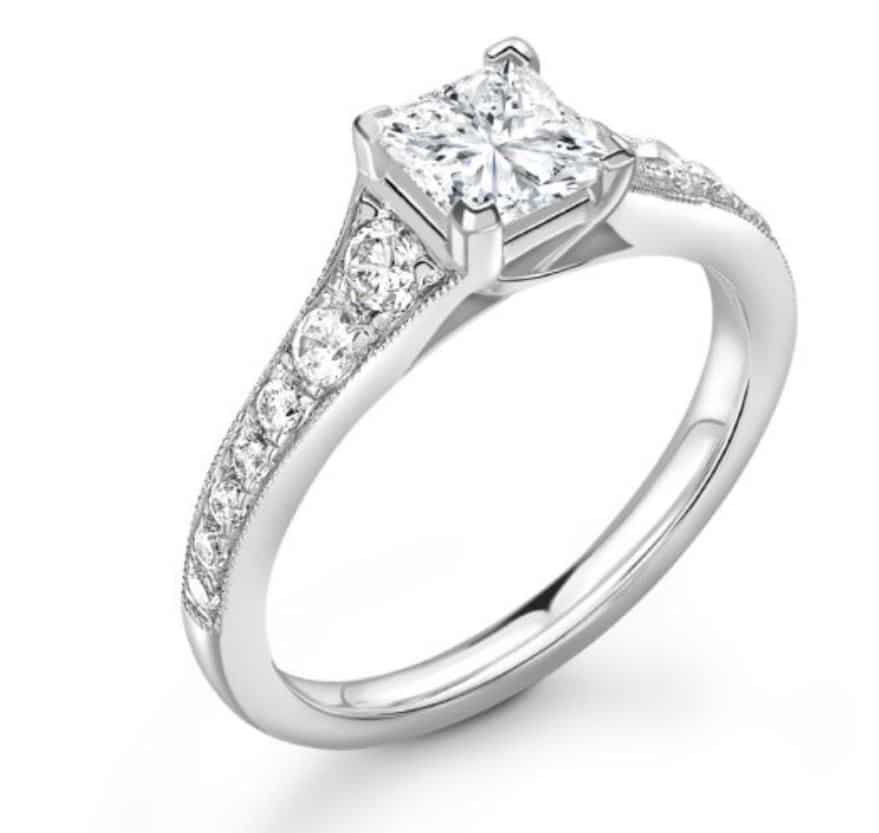
Brielle Princess Cut Shoulder Set Diamond Engagement Ring
Asscher cut – a square-shaped diamond with a high crown and stepped facets.
Cushion cut – a square-cut diamond with rounded edges.
Emerald cut – a rectangular-shaped diamond with small, rounded edges.
European cut - an antique diamond cut developed before the advent of precision technology.
Heart cut – a heart-shaped diamond – most often mounted in solitaire settings.
Marquise cut – a rugby-ball-shaped diamond set with prongs at each end, to protect the pointed ends from chipping.
Oval cut – oval-shaped diamonds are available in a range of different widths, from slim to wide.
Pear cut – a combination of the round and marquise diamond shapes. Available in a range of different widths, from slim to wide.
Princess cut – one of the most popular and affordable fancy diamond cuts for engagement rings. This modern cut is angular, square and geometric.
Radiant cut – a square or rectangular-shaped diamond with subtly curved edges; similar to the emerald shape.
Round cut – the most popular engagement ring shape, the round cut features a perfectly circular central diamond.
Trillion cut – triangular-shaped diamonds are used as accent stones to frame a central square diamond.
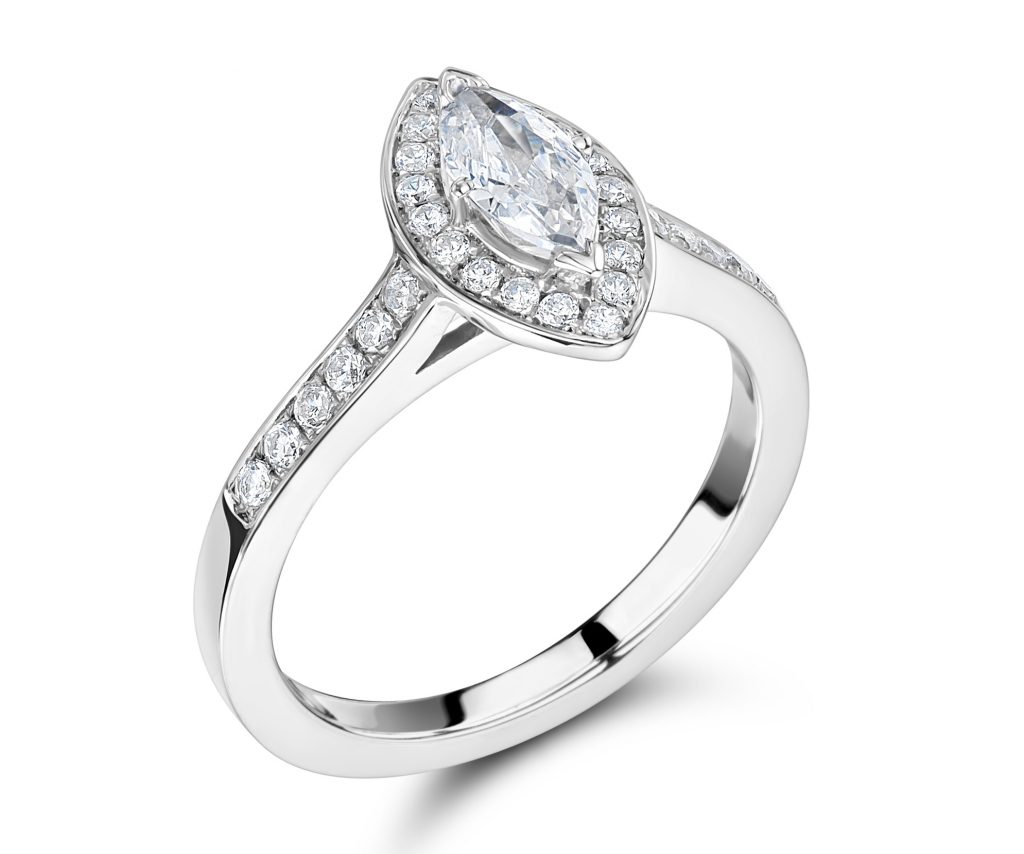
Dessa Astonishing Marquise Cut Halo Diamond Engagement Ring
Prong setting – also known as a claw setting, this is the most common type of setting for solitaire diamond rings. The diamond is placed into a metal, claw-shaped cradle and secured with 3-8 metal prongs.
Channel setting – this is where diamonds are set in a straight row, and are suspended without prongs between two horizontal strips of metal, situated above and below the stones.
Pave setting – also known as bead setting – is where a large number of small, round, brilliant cut stones are attached to the ring by tiny droplets of metal, giving a pavedeffect. This is to avoid seeing metal in between the stones. The technique involves small holes being made in the setting. Once the diamonds are placed in the holes, the surrounding metal is raised to form tiny beads, designed to hold the gemstones firmly in place.
Bezel setting – a setting technique whereby an elevated, metal, collar-type edging is wrapped around the rim of the diamond, providing a highly secure, protective fastener for the stones.
Scallop setting - delicate shared prongs form a scallop shape when viewed from the side.
Fishtail setting - where the diamond melee is set low into the metal, with fishtail-shaped cuts.
Flush setting - a sleek style, where diamond melee are set individually without prongs, directly into the metal.
Keavy round diamond prong setting eternity ring
Platinum – as well as being extremely durable, platinum is a 95% pure white metal. It doesn't fade or tarnish, and it is also an excellent choice for those with sensitive skin.
Palladium – one of the strongest types of platinum, palladium hasa greyish-white tone.
White Gold is a rhodium-plated pure gold which has been alloyed (mixed) with palladium, zinc or nickel. It is generally stronger than yellow gold.
Yellow Gold is pure gold alloyed with copper and silver.
Rose Gold is pure gold alloyed with copper. It is available in several different shades, from light red to soft pink.
Gold Plated refers to a very thin layer of pure gold used to coat a different type of lesser-value metal.
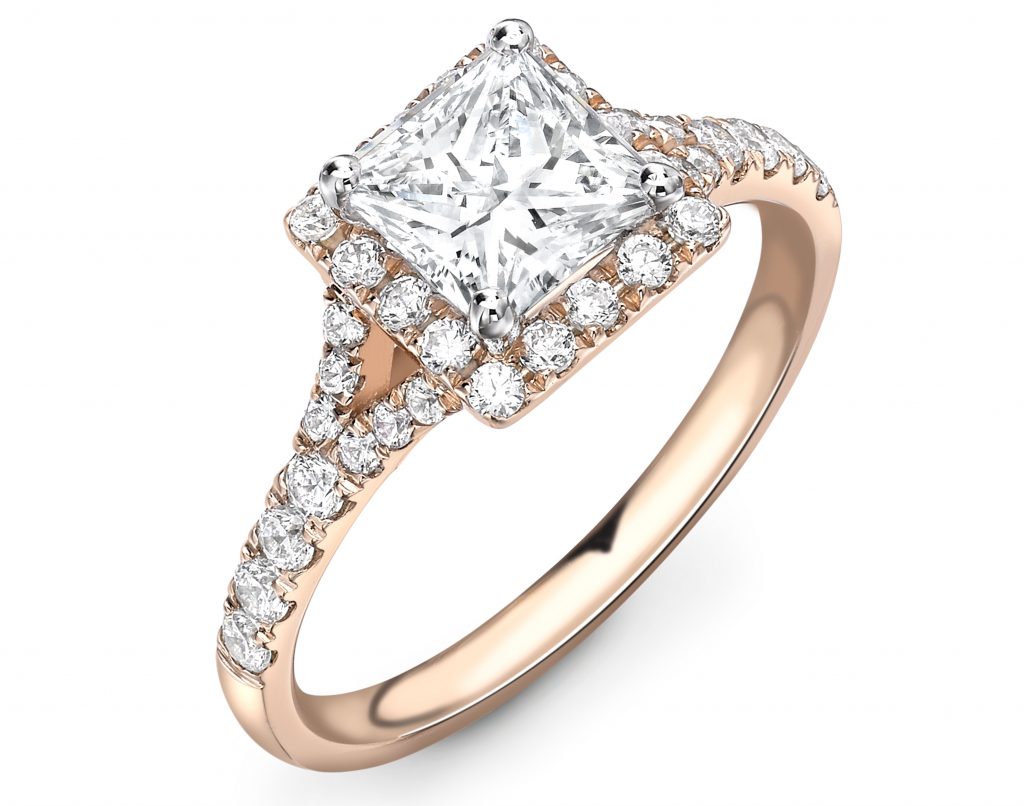
Shenaz Princess Cut Halo Ring With Diamond Set Shoulders on a Yellow-Gold Band
Art Deco – inspired by the art deco era of the 1920s, these rings are characterised by geometric, angular shapes and bold lines.
Baguette – a style often used for side stones, the baguette's main feature is its long, clean lines.
Halo – this style of engagement ring features a central stone which is surrounded by a circle of smaller stones. Some rings have a double halo – where two circles of small stones encircle one larger central diamond.
Solitaire – an engagement ring with one solitary stone.
Trilogy - as the name suggests, this ring style features a central diamond flanked by two shoulder stones.
Vintage / Antique – classic engagement rings created more than 50 years ago (antique) or before the early twentieth century (vintage).
Vintage-inspired (reproduction) – modern engagement rings created in the classic style of vintage rings.
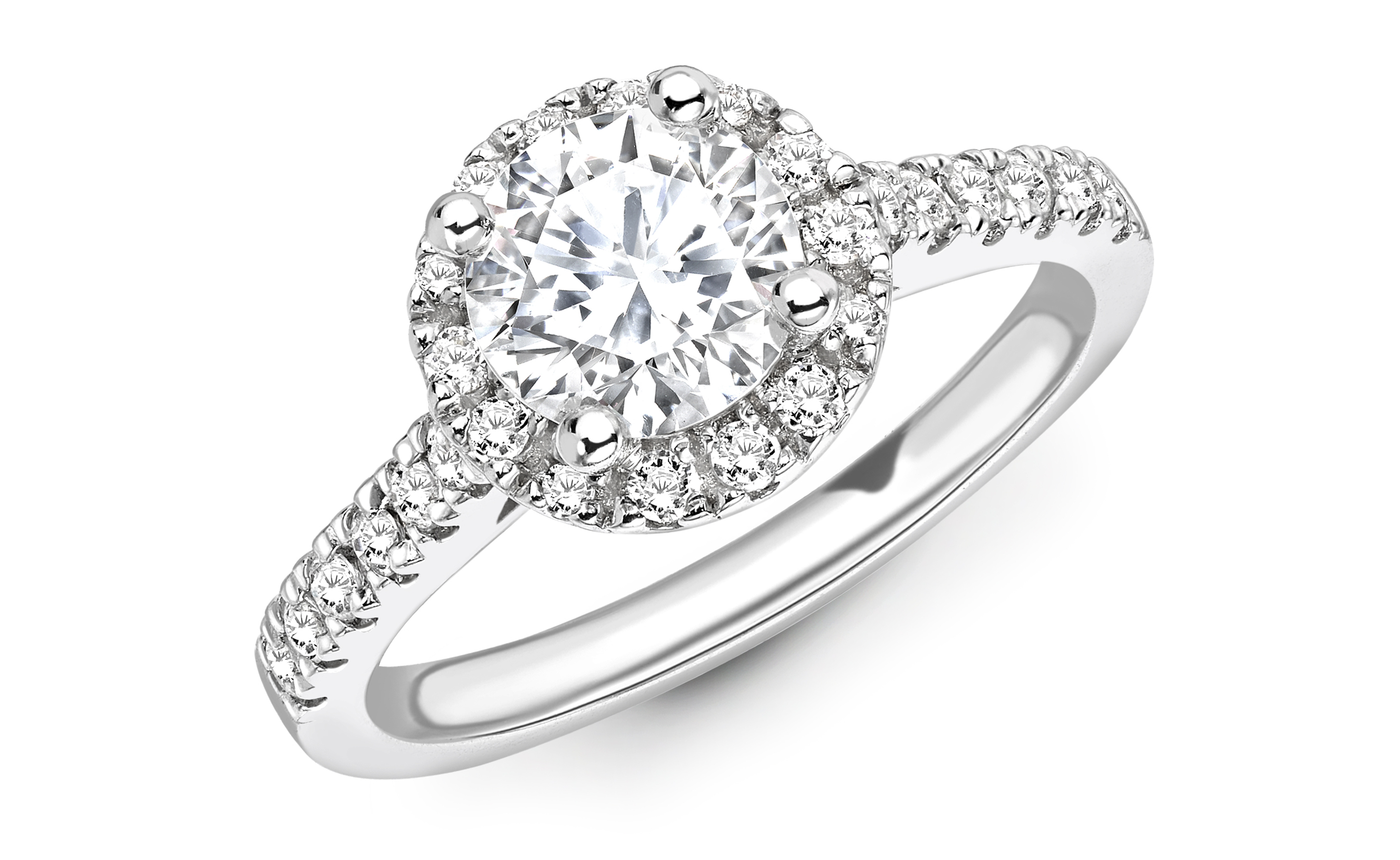
Purna Amazing Round Diamond Halo Ring With Diamond Set Shoulders
So, there you have it. You're now fully-informed about the array of options you will need to consider when shopping for that perfect engagement ring, and should feel more confident when it comes to discussing your precise requirements with the jeweller. Good luck!